In the complex business climate of 2026, companies continue to look for practical ways to grow while keeping operating costs under control. One solution has become firmly established across industries: hiring virtual assistants. This approach helps reduce overhead, increase productivity, and relieve pressure on internal teams without sacrificing quality or momentum.
As economic conditions remain unpredictable and labor markets stay competitive, the virtual assistant industry continues to expand. Providers now offer a wider range of services than ever before, supporting everything from administrative work to customer service, sales operations, marketing execution, and beyond. For many organizations, the initial decision between hiring a freelancer and a dedicated virtual assistant is the first step. Once that decision is made, the next challenge is selecting the right virtual assistant company to support long-term growth.
This guide highlights the best virtual assistant companies in 2026. These providers stand out for their service quality, operational maturity, and ability to support modern businesses at scale. Whether you need ongoing support or flexible, on-demand help, the companies below represent some of the strongest options available today.
The 7 Best Virtual Assistant Companies
- Best overall: MyOutDesk
- Best for specialized support: BELAY
- Best for one-off tasks: Upwork
- Best for on-demand support: Fancy Hands
- Best for small businesses: Prialto
- Best for quick projects: Magic
- Best for customer service: WoodBows
1. MyOutDesk

MyOutDesk is a long-standing leader in the virtual assistant industry. Founded in 2008, the company was built with the goal of helping businesses access high-quality virtual talent without the burden of rising overhead costs. Daniel Ramsey launched MyOutDesk during the financial crisis to give companies a flexible way to maintain operations and continue growing during uncertain economic conditions.
What sets MyOutDesk apart is its focus on building long-term working relationships between clients and virtual professionals. Rather than offering transactional task support, MyOutDesk emphasizes careful matching based on skills, experience, and cultural alignment. This approach allows virtual assistants to integrate smoothly into existing teams and workflows, often functioning as an extension of in-house staff.
- Lead generation and prospecting
- Database management and CRM support
- Marketing and advertising support
- Administrative tasks and general support
Pricing; starts at $1,988 per month
Pros
- Cost savings compared to full-time, in-house hires
- Easy scalability as business needs change
- Access to specialized professionals across multiple functions
Cons
- Remote collaboration may require clear communication systems
- Cultural differences can require onboarding adjustments
- Data security requires strong internal protocols
Best for: Larger and growing businesses that need scalable, integrated virtual staffing solutions.
2. Belay
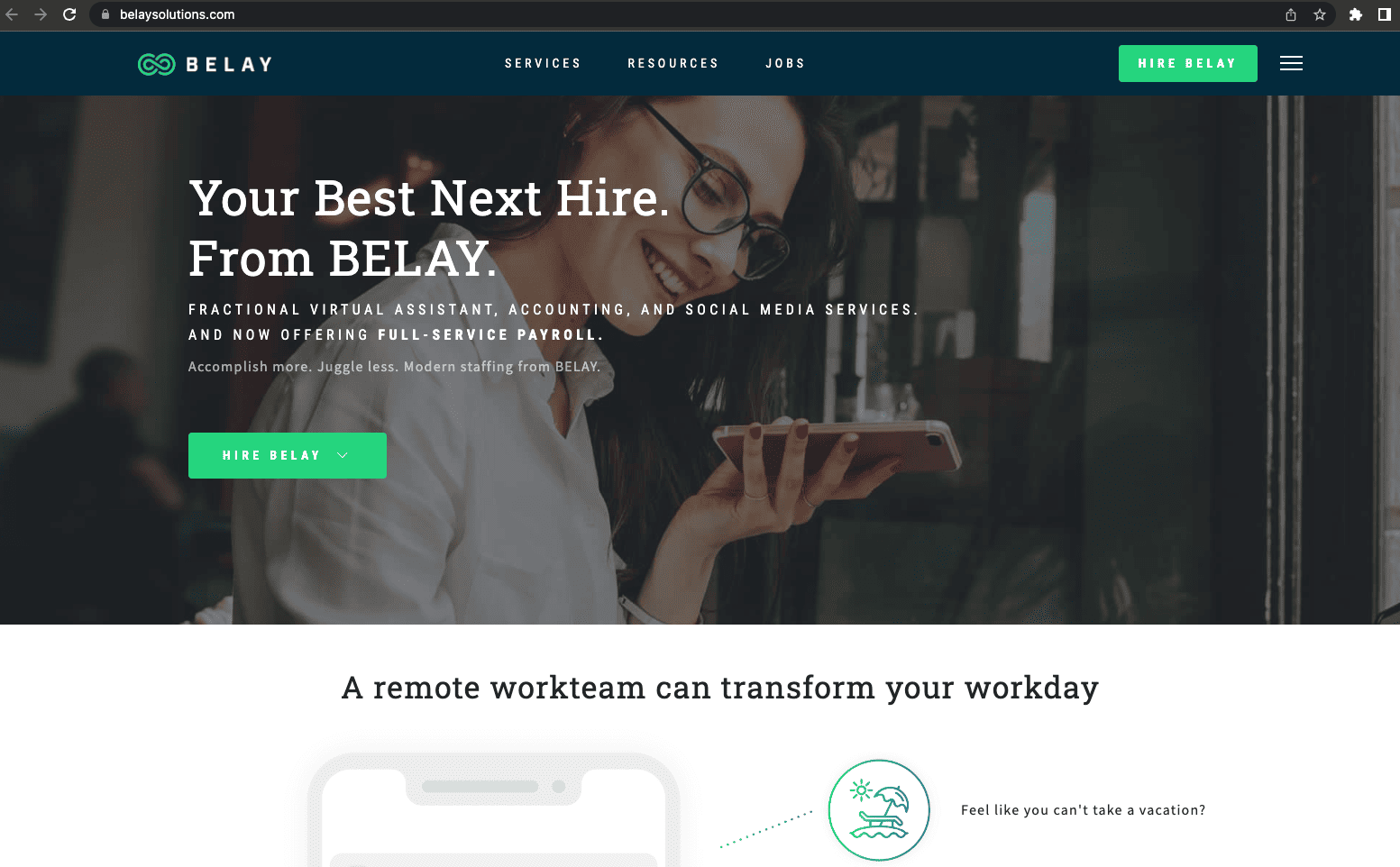
Founded in 2010, Belay focuses on pairing businesses with US-based virtual professionals who bring industry knowledge and familiarity with American business practices. The company’s personalized matching process and structured communication model appeal to organizations that prioritize local expertise and consistency.
Belay’s assistants support executives and leadership teams across administrative, financial, and operational roles. The company’s team-based support model also provides backup coverage, helping ensure continuity when workloads shift.
Belay services include:
- Executive calendar and inbox management
- Administrative support
- Project coordination
- Bookkeeping and expense tracking
- Social media support
Pricing; starts at $1,380 per month for 30 hours
Pros
- Dedicated assistants with focused attention
- Broad range of professional services
- Built-in backup support
Cons
- Higher pricing than many alternatives
- Smaller talent pool due to geographic focus
- Potential over-reliance on dedicated support
Best For: Mid-sized companies seeking specialized, US-based virtual support.
3. Upwork
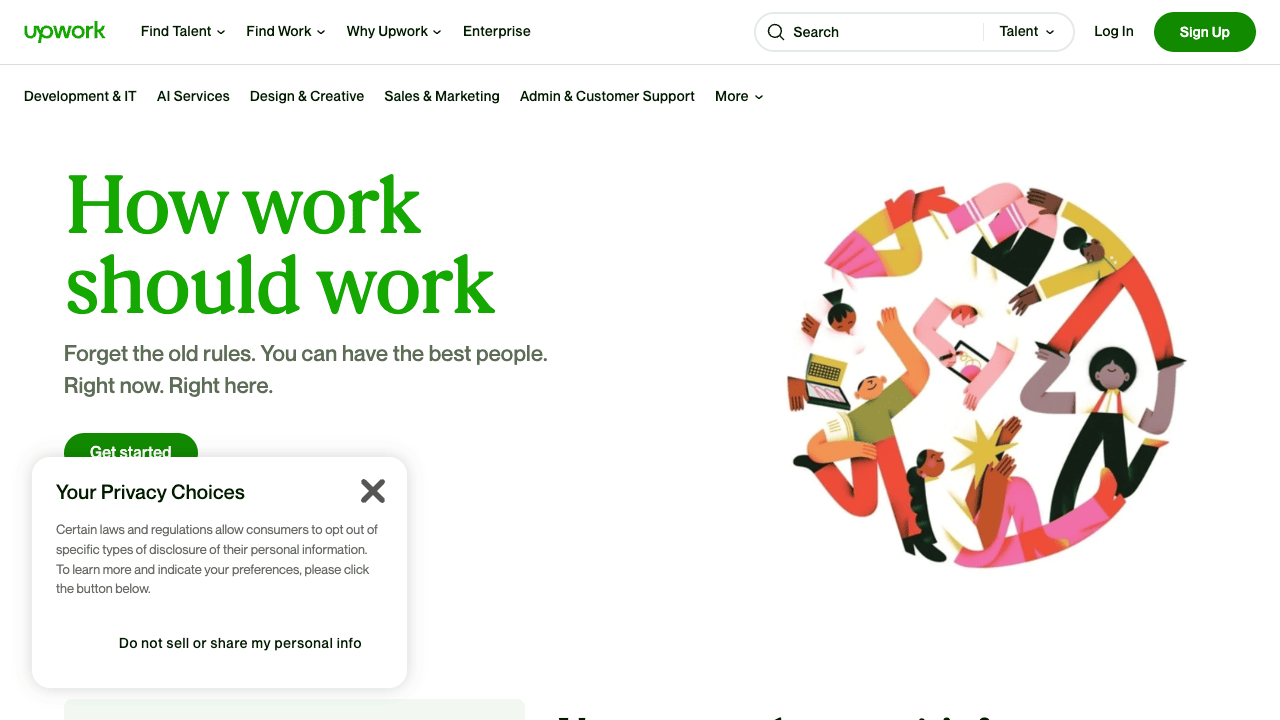
Upwork, founded in 2003, operates as a global freelance marketplace connecting businesses with independent professionals across virtually every discipline. Rather than offering managed virtual assistant services, Upwork provides access to a large pool of freelancers who can support short-term projects or specialized needs.
Businesses use Upwork for everything from administrative tasks to creative, technical, and strategic work. The platform includes tools for time tracking, milestone payments, and collaboration, giving clients visibility and control throughout engagements.
Upwork services include:
- Graphic design and branding
- Web development and programming
- Content writing and copywriting
- Virtual assistant support
- Translation and language services
Pricing starts at $49 per professional, per month
Pros
- Access to a wide and diverse talent pool
- Flexible engagement options
- Built-in project management tools
Cons
- Quality can vary significantly between freelancers
- Vetting requires time and effort
- Platform fees increase total cost
Best For: Businesses of all sizes that need help with one-off or project-based tasks.
4. Fancy Hands
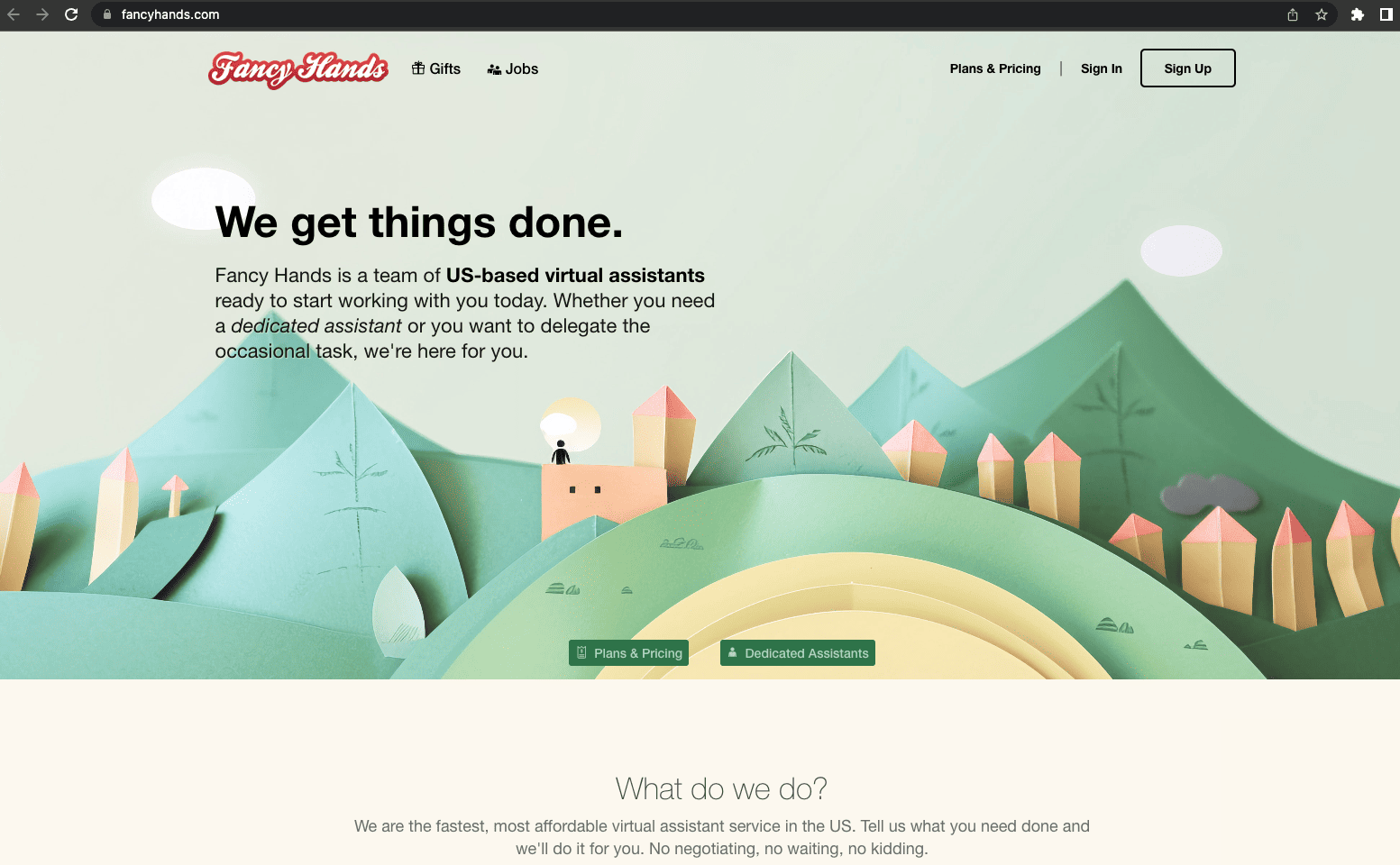
Founded in 2010, Fancy Hands offers a membership-based approach to virtual assistance. Clients submit task requests as needed, and Fancy Hands assigns them to US-based virtual assistants.
This model works well for businesses that need occasional support without committing to a dedicated assistant. Tasks often include scheduling, research, and general administrative work.
Fancy Hands services include:
- Appointment scheduling
- Travel planning
- Research and data gathering
- Document preparation
- Customer email support
Pricing: Starts at $17.99 per month for three requests
Pros
- Cost-effective for light workloads
- Broad task coverage
- No long-term commitment required
Cons
- Limited control over task assignment
- Potential delays during high-volume periods
- Sensitive data requires careful handling
Best For: Small to mid-sized businesses needing on-demand administrative support.
5. Prialto
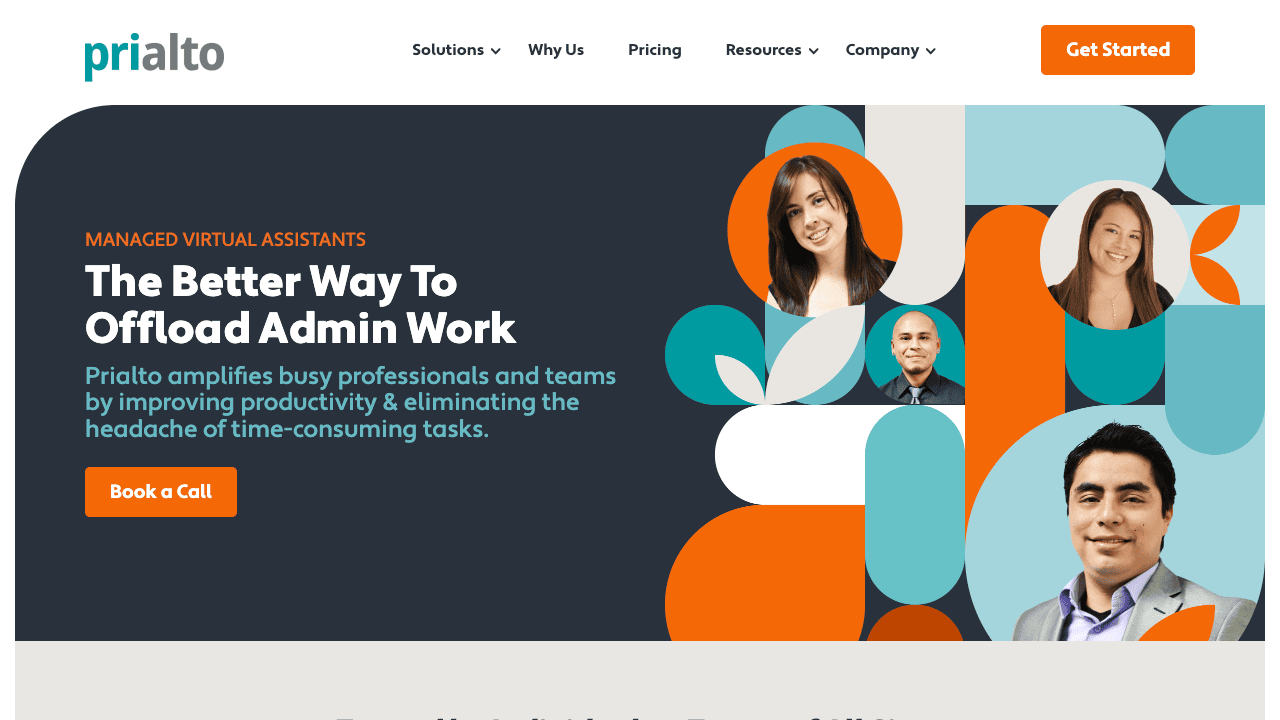
Prialto was founded in 2009 and is known for its structured onboarding and managed support model. Each client is paired with a dedicated virtual assistant team, supported by documented workflows and standardized processes.
With assistants located in the US, the Philippines, and Costa Rica, Prialto provides global coverage while maintaining consistency through strong internal systems.
Prialto services include:
- Calendar and inbox management
- Meeting coordination
- Travel planning
- Research and reporting
Pricing: Starts at $1,450 per month for 55 hours
Pros
- Strong onboarding and process documentation
- Predictable support structure
- Reduced administrative burden
Cons
- Less direct control over assistants
- Not ideal for real-time needs
- Potential dependency on managed systems
Best For: Small businesses seeking structured, recurring support.
6. Magic

Founded in 2015, Magic offers flexible virtual assistant services with an emphasis on speed and availability. Clients can delegate tasks around the clock, making Magic appealing for quick requests and short-term needs.
Magic combines human assistants with automation tools to streamline task execution, though the service leans more transactional than relationship-based.
Magic services include:
- Scheduling and task management
- Research
- Travel coordination
- Customer support
Pricing: Starts at $10 per hour
Pros
- 24/7 availability
- Flexible scaling
- Fast turnaround
Cons
- Less personalized support
- Dependence on technology
- Data security considerations
Best For: Businesses needing fast help with short projects or immediate tasks.
7. WoodBows

Founded in 2015, WoodBows provides customized virtual assistant services with an emphasis on industry-specific expertise. Clients work closely with WoodBows to define needs before assistants are assigned.
With a global talent pool and flexible service packages, WoodBows supports administrative, operational, and customer-facing roles.
WoodBows services include:
- Administrative support
- Project coordination
- Research and analysis
- Social media management
- Customer service
Pricing: Starts at $599 per month for 40 hours
Pros
- Industry-focused expertise
- Customizable service plans
- Emphasis on data security
Cons
- Limited diversity in some niches
- Onboarding time required
- Higher cost for specialized roles
Best For: Businesses seeking tailored virtual support across multiple functions.
Virtual Assistant Company Comparison Chart
| Virtual Assistant Company | Pricing | Advantages | Disadvantages |
| MyOutDesk | Starting at $1,988/month for 40 hours/week | Cost-effective Flexible scalability Specialization | Communication Cultural differences Confidentiality Concerns |
| Belay | Starting at $1,380 per month for 30 hours | Dedicated Support Range of Services Team-based | Higher cost Limited talent Potential dependency |
| Upwork | Starting at $49 per professional, per month | Diverse Talent Flexible Scalability Transparency | Competitiveness Quality Concerns Fee Structure |
| Fancy Hands | Starting at $17.99 per month for 3 requests | Convenience Diverse Skills Cost-effective | Lack of Control Communication Challenges Privacy Concerns |
| Prialto | Starting at $1450 per month for 55 hours | Productivity Boost Cost-effective Wide Expertise | Lack of control Communication Potential Dependency |
| Magic | Starting at $10 an hour | Advanced AI Available 24/7 Flexible Scalability | Limited human-touch Tech Dependency Security Concerns |
| Woodbows | Starting at $599 per month for 40 hours | Industry-specific Customizable Emphasis on Security | Lack of diversity Learning Curve Higher Price |
Choosing the Best Virtual Assistant Company for Your Business in 2026
When selecting a virtual assistant provider, consider location, vetting processes, scalability, and long-term fit. Philippines-based professionals often offer strong English proficiency and cost efficiency, while US-based assistants bring familiarity with local markets. Thorough vetting and structured onboarding are essential regardless of location.
The right provider should align with your operational needs today while supporting growth in the years ahead.
If you are exploring virtual assistants for the first time or considering expanding your current team, a consultation can help clarify next steps and identify the best fit for your business.
Frequently Asked Questions
What do virtual assistants do?
Virtual assistants provide remote support across administrative, operational, and specialized functions. Tasks may include scheduling, email management, research, CRM updates, customer support, and marketing assistance.
Are virtual assistant services cost-effective?
In most cases, yes. Virtual assistants reduce costs associated with benefits, office space, and equipment while offering flexible pricing options.
Are US-based virtual assistants better?
Quality depends on the individual, not the location. US-based assistants may offer cultural familiarity, while offshore assistants often provide broader availability and lower costs.
Should I hire a virtual assistant or a freelancer?
Virtual assistants are best for ongoing support and recurring responsibilities. Freelancers are better suited for specialized or project-based work.
How do I choose the right virtual assistant?
Define your needs clearly, evaluate candidates based on skills and communication, and choose a provider with strong vetting and onboarding processes.