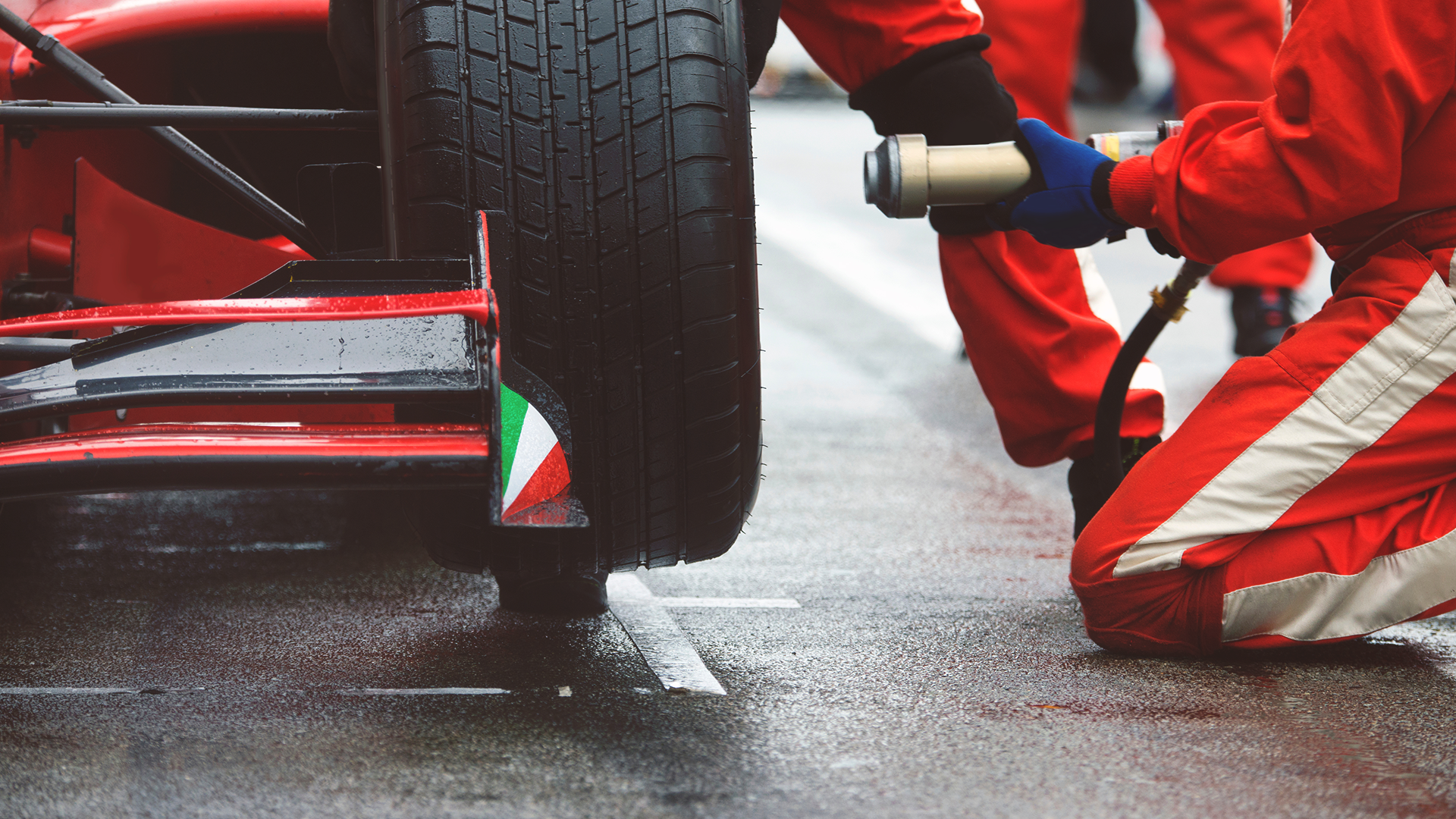
I recently watched the 2025 movie F1, starring Brad Pitt and Javier Bardem. The racing itself was exciting, and the movie was genuinely entertaining, but one detail stood out to me several times while watching: the pit crew. Those scenes where the car pulls in, the clock is ticking, and a large group of people move in near-perfect synchronization are hard to ignore. Every action is deliberate. Every role is narrow but essential. And the margin for error is almost nonexistent.
There is a moment where a member of the pit crew leaves a drill on the ground for just a second too long. The car takes off and nearly runs it over. Nothing breaks. Nothing goes wrong. But it is a close call in a very close race, and the consequences could have been disastrous.
One missed step.
One delayed movement.
One person is slightly out of position… And the entire race can be lost in seconds.
As I watched those sequences, I found myself thinking less about motorsports and more about work(unfortunately). About effective teams, specifically. About how often business outcomes hinge on people whose names never show up in presentations or performance reviews. It was one of those moments where something clicks, and once it does, you cannot unsee the parallel.
The Driver Gets the Credit, But the Team Wins the Race
In Formula 1, the driver is the face of success. They stand on the podium, they give the interviews, and they lift the trophy. But no one who truly understands the sport believes the driver wins alone. The pit crew is just as responsible for the outcome as the driver. Their work happens under pressure, in tight windows, with no room for improvisation. Most of it goes unnoticed unless something goes wrong.
Business works the same way. Leaders, founders, and executives often become the visible symbol of success. But behind every strong leader is a system of people handling execution, coordination, and follow-through. When those roles are clear and properly supported, everything moves faster. However, when they are stretched thin or poorly defined, even great leadership struggles to compensate.
When Small Breakdowns Become Big Problems
What stood out to me about the pit crew was not just how fast they worked, but how little waste there was. No overlapping responsibilities. No confusion about ownership. Compare that to how many teams operate today, and the difference in discipline and structure becomes obvious.
One person owns the marketing strategy and execution. Another handles customer communication, reports metrics, and manages tools. Leaders jump into operational work because there is no capacity elsewhere. Everyone is busy, yet progress feels harder than it should. In environments like this, small inefficiencies add up quickly. Missed handoffs. Delayed responses. Errors that seem minor on their own but create real downstream consequences. Just like a pit stop, performance is often decided in moments most people never see.
Team Performance Is a Design Problem, Not a Motivation Problem
When teams struggle, the default explanation is usually effort. People assume they need to work harder, move faster, or push longer hours. Watching the pit crew made something clear to me: high performance is not about effort alone. It is about structure.
Each person in that crew has a defined responsibility. They are trained for it, they are trusted to execute it, and they are not expected to carry work that does not belong to them. That clarity allows speed, consistency, and focus. The same principle applies in business. When roles are well defined and properly supported, teams do not need heroic effort to perform well. The system does the heavy lifting.
Why Hybrid and Remote Teams Fit This Model So Well
This is where hybrid and remote teams stop being a work arrangement and start becoming a strategic advantage.
In many organizations, the most effective model keeps leadership and decision-making close to the business, while execution is supported by specialized roles that do not need to sit in the same office. Local managers maintain visibility and accountability. Remote professionals focus on specific functions and deliver consistent output. Communication stays intentional. Work moves without unnecessary bottlenecks. It is not about replacing people. It is about giving the right people the space to do their jobs well. Much like a pit crew, the goal is not to add more bodies. The goal is to design a system where every role contributes cleanly to the outcome.
The Value of Roles That Do Not Get Applause
One of the most important lessons from Formula 1 is that some of the most valuable work is invisible. No one applauds the person tightening the last lug nut. But if they miss it, everyone notices. In business, many critical roles operate in the background. Administrative support. Reporting. Scheduling. Follow-up. Customer coordination. These functions rarely get attention, yet they are foundational to performance.
When they are handled well, leaders can focus on growth and strategy. When they are neglected, leaders become bottlenecks. Strong teams respect the importance of every role, not just the ones tied to revenue or visibility.
When Support Is Designed In, Not Scrambled For
There is another easy-to-miss detail about the pit crew: they are not reacting to chaos. They are prepared for it. They are not stepping in to cover for someone else because a role was understaffed or poorly defined. Once that happens, the race is already lost. Each responsibility exists for a reason. Each person is there to do a specific job, so no one is constantly compensating for gaps elsewhere in the system. That distinction matters in business.
Many in-person teams are capable of supporting one another, but that support often shows up as emergency coverage. People jump in because someone is overwhelmed. Roles blur. Work overlaps. Burnout follows. Over time, even strong teams start to feel fragile because they are held together by goodwill instead of structure. This is where intentionally adding outsourced talent changes the equation.
When businesses integrate managed remote professionals from MyOutDesk into their existing teams, the goal is not to offload responsibility. It is to restore clarity. Administrative work, operational tasks, coordination, and execution are handled consistently, allowing in-person teams to focus on the responsibilities they were hired for. The result is not less collaboration, it’s better collaboration. Instead of constantly filling gaps, teams work in parallel. Support becomes proactive rather than reactive. People stop operating in crisis mode and start operating with discipline. The system holds, even when pressure increases. A team that truly works well together is not always rescuing itself. It is one that rarely needs to. In racing terms, this is the difference between scrambling during a pit stop and executing one cleanly, every time. Winning depends on that difference.
What This Means for Business Leaders
If there is one takeaway from watching that pit crew, it is this: performance scales when teams are built intentionally. That means asking hard questions:
- Are roles clearly defined, or are people compensating for gaps?
- Is leadership focused on direction, or stuck in execution?
- Are systems designed to support growth, or just keep things moving day to day?
The companies that scale well are not necessarily the ones with the most talent. They are the ones with the best team architecture.
A Final Thought
Watching F1 was a reminder that success is rarely about one person driving harder or faster. It is about building a team that works in sync, under pressure, with clarity and trust.
Whether you lead a marketing team, an operations group, or an entire organization, the question is the same: Is your team structured to perform, or is it relying on individuals to hold everything together? The best outcomes come from teams where every role matters, every contribution counts, and the system itself is designed to win the race.
If you are thinking about how to build or support that kind of team, start by looking at the structure behind the scenes. That is where performance is decided.
Looking for your own reliable, hotshot pit crew in your business? LET’S TALK, and we’ll make sure you win every race you enter.