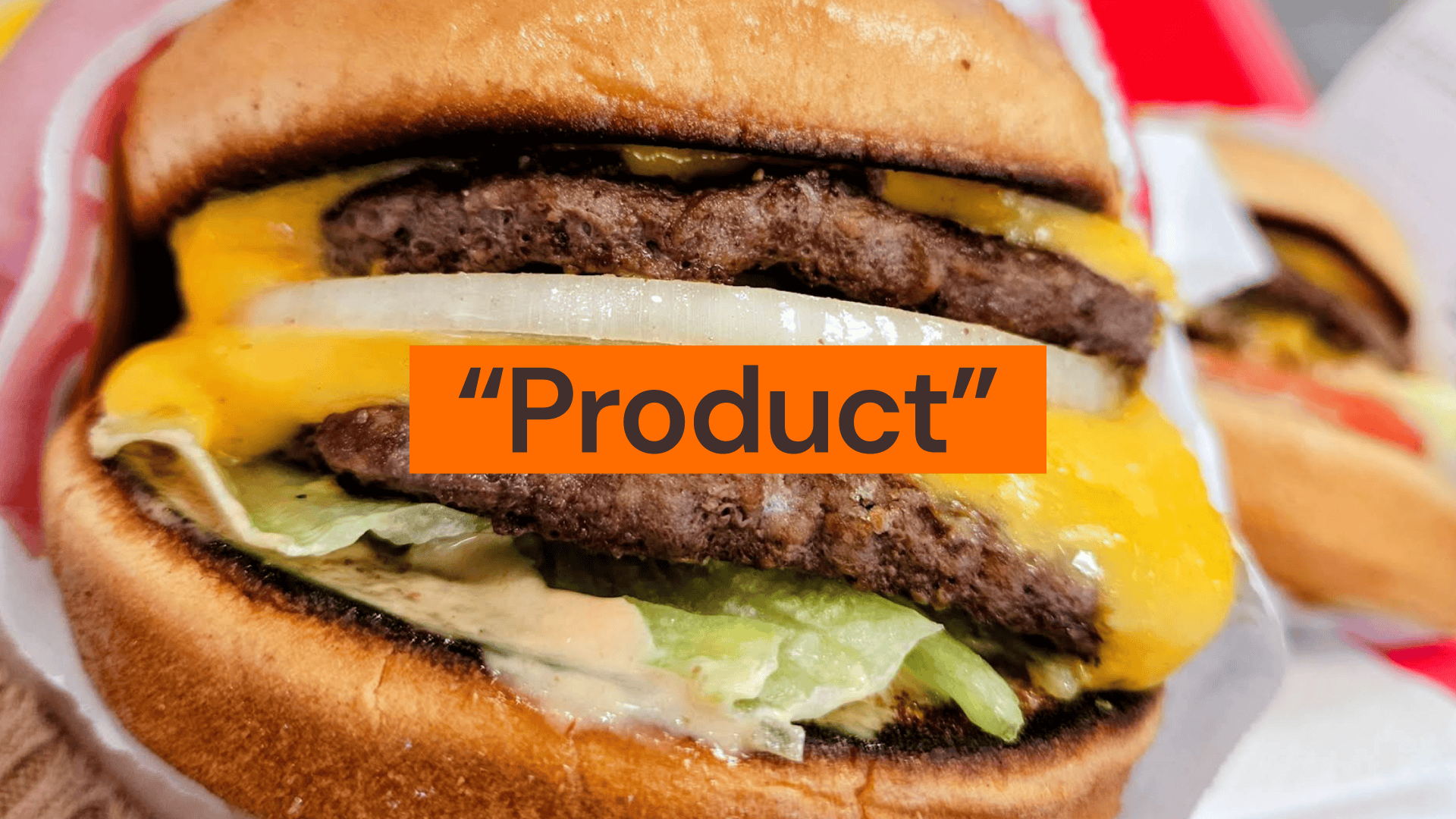
Recently, a short clip of a CEO sampling his company’s “product” went viral. You know the one…
On paper, it was a smart idea. Leaders should stand behind what they sell. If you believe in your offering, you should be willing to use it yourself. But in today’s environment, symbolism alone doesn’t build trust. A quick moment, a carefully framed video, or a one-off gesture might capture attention, but it rarely earns lasting credibility.
Execution does. And in 2026, that distinction matters more than ever.
We Are Living in the Transparency Economy
Customers, employees, and partners now operate in what can best be described as a transparency economy. Leaders are scrutinized. Companies are examined. Authenticity is tested constantly and often in public. In this environment, belief is not communicated through messaging alone. It shows up in operational decisions.
Do you use your own product? Do your teams rely on the same systems you sell? Are your internal workflows built on the very solutions you promote?
If the answer is no, the market eventually notices.
Conviction Is Operational, Not Performative
There is a difference between symbolic confidence and operational conviction. Symbolic confidence is a moment, whereas operational conviction is a model.
Symbolic confidence says:
“We stand behind this.”
Operational conviction says:
“We built our company on this.”
The second path is harder. It requires alignment across leadership, systems, hiring, culture, and long-term investment. But it also builds credibility that strengthens over time. At MyOutDesk, we believe leaders should use what they sell. That belief has shaped how we operate for years.
We Don’t Just Recommend Global Talent. We Build With It.
MyOutDesk provides fully vetted global virtual professionals to support U.S. businesses. But this is not a service we market from a distance. We use it ourselves.
Nearly half of our marketing team is based in the Philippines. These are not temporary contractors or short-term hires; they are integrated members of the team. Many have been promoted, and some have grown into leadership roles. They collaborate daily with our U.S. staff as if they were across the hall, not an ocean.
Our CEO has traveled to the Philippines to meet them, and we have flown team members to the United States for in-person collaboration and training. That is not a symbolic gesture; it’s operational trust.
When you structure your company around the same model you sell, you are not testing a theory. You are demonstrating that the system works.
Proof in Practice: When Global Talent Becomes Core Leadership
One of the strongest signals that a model works is not what leadership says about it, but what the outcomes look like over time.
At MyOutDesk, some of the clearest examples come from the people who began their careers with us as virtual professionals and grew into core members of our internal team. These are not short-term contractors or temporary support roles. They are long-term contributors who help operate and shape the business every day.
Two examples illustrate this in practice. Some of the strongest proof of this model comes from the people who started as virtual professionals and grew into long-term leaders within the organization. Several members of the MyOutDesk team have now spent more than a decade with the company after beginning their careers as virtual assistants.
Case Example: Alvin Leveriza – Technical Operations, Marketing

Alvin Leveriza leads Technical Operations for the MyOutDesk marketing team, helping manage the systems, tools, and technical infrastructure that support our campaigns and digital initiatives.
His journey with MyOutDesk began in 2013 when he joined as an Inside Sales Agent supporting a luxury real estate client in Florida. After an accident required a career shift, Alvin transitioned into creative and marketing work, building on his background in Multimedia Arts. Over time, his role expanded as he developed deeper expertise in marketing systems, technical workflows, and operational support. Today, he plays a critical role in helping the marketing organization run smoothly and efficiently.
Working remotely with MyOutDesk also allowed Alvin to improve his personal quality of life. The flexibility of distributed work enabled him to support his aging parents, eliminate long commutes, and pursue personal goals that might otherwise have been out of reach, including traveling to the Arctic Circle to see the Northern Lights.
Alvin’s story reflects what can happen when global talent is integrated into a team for the long term and given room to grow.
Case Example: Chai – Marketing and Growth Strategy
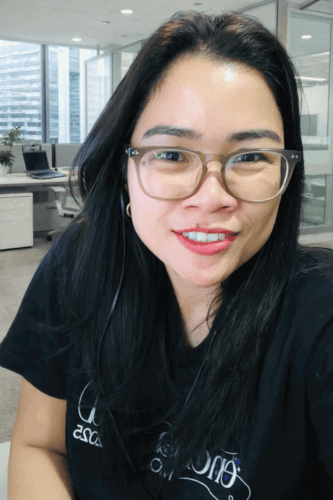
Chai joined MyOutDesk in 2012 as a Virtual Assistant supporting the sales organization. In that role, she handled lead calls, managed the company’s 800 line, operated live website chat, and helped schedule appointments for the sales team.
It was a fast-paced role that required strong communication skills, organization, and adaptability. Over time, Chai expanded her responsibilities and continued developing new capabilities within the organization. Today, she manages U.S.-based teams, oversees paid media initiatives, and leads outbound prospecting strategies while collaborating directly with leadership to drive growth.
Her career progression reflects something we see often when distributed professionals are fully integrated into an organization: talent rises when given the opportunity and support to do so.
Together, Alvin and Chai represent something larger than individual success stories. They demonstrate what happens when companies treat global professionals as long-term team members rather than temporary resources.
When the model is implemented with intention, distributed talent does not just support a business. It helps build it.
Why This Matters for Enterprise Leaders
As businesses scale in 2026, leaders are facing several realities at the same time:
- Talent shortages in key markets
- Rising labor costs
- Growing pressure to maintain productivity without expanding overhead
Distributed global teams are no longer a fringe strategy. For many organizations, they are becoming an operational necessity. But the more important question is this:
Do you believe in the model enough to build with it yourself?
If leadership hesitates internally, that hesitation tends to surface externally as well. Belief drives adoption, adoption builds familiarity, and familiarity eventually produces better results. When leadership demonstrates confidence through real integration, it creates a ripple effect:
- Teams trust the model.
- Processes mature faster.
- Culture adapts intentionally.
- Results become easier to measure.
The Trust Multiplier
There is a multiplier effect when a company uses its own solution. Employees become stronger advocates. Sales conversations become more authentic. Product development improves through firsthand experience. Marketing speaks from practice rather than theory.
Most importantly, customers can feel the difference. They are not being sold an idea; they are stepping into a system that is already working. And that difference builds long-term trust.
Leadership in 2026 Is About Alignment
The modern leader does not just endorse innovation… they operationalize it. If you promote AI, your company should be integrating AI. If you advocate distributed teams, your company should be structured around them. And if you sell productivity systems, your teams should be using them every day.
Alignment has become a new form of credibility. Inconsistent leadership models break trust quickly in today’s environment. Aligned organizations strengthen it.
What This Means for Companies Looking to Scale
If your organization is considering expanding with global talent, the real question is not whether the model works. The question is whether you are prepared to integrate it fully.
That means:
- Building long-term roles, not just assigning tasks
- Creating systems for cross-border collaboration
- Investing in training and performance management
- Treating distributed professionals as part of the core team
When done correctly, global talent is not outsourcing. It’s a strategic workforce expansion. And when leadership demonstrates belief by building their own company this way, it sends a powerful signal.
The Standard Every Leader Should Hold

Before asking customers to trust your solution, ask yourself a simple question:
Would I build my own company this way?
If the answer is yes, you are leading with conviction. If the answer is no, there is work to be done.
At MyOutDesk, we operate with the same distributed global talent model we provide to our clients. Not because it is trendy. Not because it photographs well. But because it works. And when you believe in your product enough to structure your own organization around it, you do not need symbolic gestures to prove it. Your results speak for themselves.